














We’re here to answer any question you may have.
Would you like to join our growing team?
careers@hub.com
Would you like to join our growing team?
careers@hub.com
Error: Contact form not found.

CryptoBind Payment HSM – Uncompromised Payment Security
India’s First ‘Made in India’ Payment HSM
Secure. Comply. Innovate.
The CryptoBind Payment HSM is a next-generation Hardware Security Module (HSM) designed to meet the stringent security demands of payment transactions, encryption, and compliance. Engineered for exceptional performance and scalable cloud deployment, it provides a comprehensive solution for securing cryptographic processes across diverse financial environments.
About Cryptobind
Hardware Security Module (HSM)
A tamper-resistant, high-security hardware device designed to perform cryptographic operations such as encryption, decryption, and key management. CryptoBind Payment HSM protects sensitive financial data, ensuring secure transactions in banking, fintech, and payment processing systems.
Enterprise Key Management
A centralized system for creating, storing, distributing, and rotating cryptographic keys securely. It ensures compliance with industry regulations and protects sensitive data across multiple applications and cloud environments.
Quantum Cryptography
Utilizes quantum-safe encryption algorithms to protect data from future quantum computing threats. CryptoBind is post-quantum ready, ensuring long-term security for banking and enterprise data.
PLL Data Vault
A highly secure Personalized Logical Layer (PLL) Data Vault that protects customer data, financial records, and personal identifiers while enabling controlled and monitored access for authorized users.
Vault-Based & Vaultless Tokenization
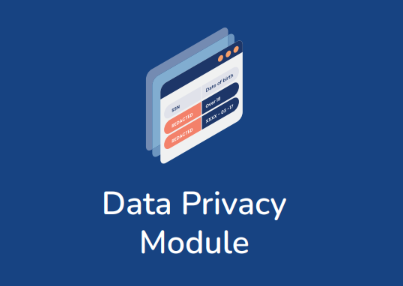
Data Privacy Module
A specialized module that ensures compliance with privacy laws (GDPR, PCI DSS, etc.) by implementing encryption, anonymization, and controlled access to sensitive information.
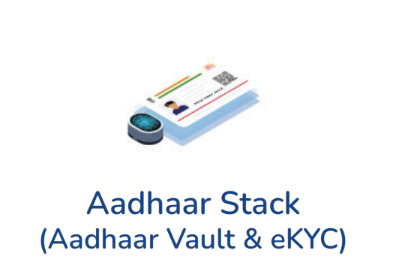
Aadhaar Stacking
A secure framework for storing, verifying, and encrypting Aadhaar data while ensuring compliance with Indian government regulations, protecting users’ personal identities from misuse.
Data Masking
Replaces sensitive data (e.g., credit card numbers, SSNs) with fictional but realistic values, allowing organizations to use data for testing and analytics without exposing real information.
Data Encryption
Protects sensitive data in transit and at rest using industry-standard encryption algorithms such as AES-256, ensuring that unauthorized parties cannot access or interpret the data.
Application-Level Encryption
Encrypts data directly at the application layer before it reaches storage, ensuring end-to-end data security across transactions, databases, and cloud environments.
Column-Level Encryption
Encrypts specific database columns containing sensitive information, providing fine-grained control over data security while allowing non-sensitive data to remain accessible for operations.
Transparent Data Encryption (TDE)
Encrypts entire database files and logs at the storage level without requiring changes to applications, ensuring seamless protection against unauthorized access.
Certificate Lifecycle Management
Automates the issuance, renewal, and revocation of digital certificates, ensuring secure authentication, encrypted communications, and compliance with PKI (Public Key Infrastructure) standards.
Confidential Computing
Uses secure execution environments (Trusted Execution Environments – TEEs) to protect sensitive data while being processed, preventing exposure even to cloud providers or system administrators.
Homomorphic Encryption
Allows computations to be performed directly on encrypted data without decrypting it, enabling secure data processing for AI, analytics, and financial transactions while preserving privacy.
Data Discovery & Classification
Identifies, categorizes, and labels sensitive data across structured and unstructured sources, helping organizations enforce security policies and comply with data protection laws.
IoT Security Platform
Provides end-to-end encryption, device authentication, and anomaly detection for IoT ecosystems, securing connected devices from cyber threats in industries like healthcare, automotive, and smart cities.
Authentication (MFA, SSO, FIDO)
CURIOUS TO LEARN MORE ABOUT ANY SPECIFIC SERVICE WE OFFER?
Adding {{itemName}} to cart
Added {{itemName}} to cart